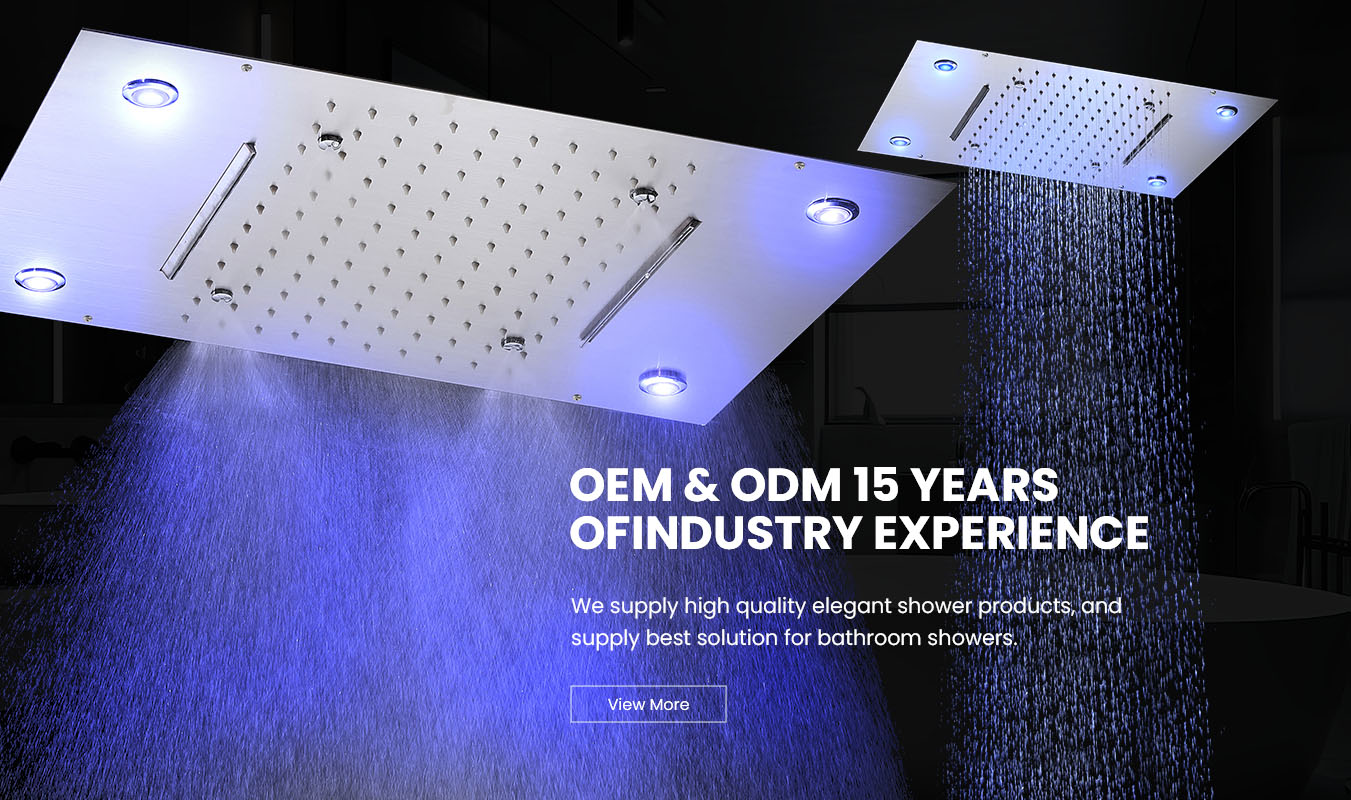
A leaky shower head may look like a small maintenance problem, but in real supply projects it often points to deeper issues in sealing design, machining precision, cartridge quality, or assembly control. The U.S. Environmental Protection Agency says household leaks waste nearly 1 trillion gallons of water each year nationwide, and the average household’s leaks can waste more than 10,000 gallons annually. That is why stopping a leak is not only about quick repair. It is also about choosing a shower components manufacturer that can hold stable quality from sample to bulk order.
For most installations, the first step is to identify where the leak starts. Some leaks come from the connection between the shower arm and the shower head, where thread fit, sealing tape, or washers are no longer working well. Others come from inside the valve system, where the shutoff is incomplete and water continues to pass even when the faucet is closed. In practical terms, the immediate repair may involve tightening the joint, replacing the gasket, cleaning mineral buildup, or changing the cartridge. In sourcing terms, the bigger question is why the product began leaking in the first place.
A reliable shower system production process begins long before final assembly. In shower parts manufacturing, the normal flow includes raw material selection, forming or casting, CNC machining, polishing, surface finishing, assembly, pressure testing, and final inspection. If thread tolerances drift during machining, the sealing surfaces may not fit correctly. If finishing quality is unstable, corrosion can shorten service life around the joint area. If assembly torque is inconsistent, internal sealing parts may wear early. This is one of the clearest differences in manufacturer vs trader evaluation. A manufacturer can trace leak causes back to the production stage more directly, while a trader often has to rely on outside factory feedback. EMYSA describes itself as a professional manufacturer of Brass Shower Head, Stainless Steel Shower Head, and concealed shower mixer products, with exports mainly to Europe and Australia and WRAS-related experience.
Material choice has a direct impact on leak resistance. Brass is widely used for valve bodies and threaded connections because it offers stable machining and sealing performance. Stainless steel is commonly used for visible shower components because of its corrosion resistance and long-term appearance stability. For export market compliance, water-contact materials must also meet regulatory expectations. The EPA states that lead-free plumbing products must not exceed a weighted average of 0.25 percent lead across wetted surfaces. For buyers sourcing export shower fittings supplier programs, that makes material verification part of the project sourcing checklist from the very beginning.
A leaky shower head is often the result of weak quality control checkpoints. Buyers should confirm incoming material inspection, machining checks for threads and sealing faces, finish inspection, leak testing, and pressure testing before shipment. WRAS shower outlet listings show typical approved operating references such as maximum working pressure of 5.0 bar and maximum operating temperature of 60 degrees Celsius for some shower outlet products, which shows why real-use testing matters in bulk shower components supply. A product that looks good on the surface is not enough if the supplier cannot prove stable function under pressure.
In the OEM / ODM process, leak prevention should be addressed before mass production. A sound workflow includes requirement confirmation, engineering review, sample validation, sealing verification, pressure testing, packaging review, and pilot run approval. Too many projects focus only on finish, logo, or style while leaving thread compatibility and sealing structure until later. That creates risk when the order moves into repeated production. Bulk supply considerations should therefore include batch-to-batch consistency in threads, washers, cartridges, finish stability, and inspection records. EMYSA’s product categories cover Brass Showerhead, stainless steel shower head, Hand Shower, shower head fittings, and concealed shower system, which supports more integrated OEM shower components development and long-term shower system production.
| Focus Area | What Buyers Should Confirm |
|---|---|
| Product structure | Thread standard, sealing method, gasket and cartridge fit |
| Material control | Brass quality, stainless steel grade, compliant water-contact materials |
| Quality plan | Leak test, pressure test, dimensional inspection |
| OEM support | Sample validation, revision process, pilot run consistency |
| Export readiness | WRAS-related market expectations, batch traceability |
The short answer to fixing a leaky shower head is to inspect the joint, replace worn sealing parts, clean buildup, and confirm whether the valve is shutting off correctly. The better long-term answer is to source from a manufacturer that can control materials, machining, testing, and repeat quality in one system. That is where EMYSA’s factory-based model offers stronger value for buyers who need stable OEM development, dependable bulk supply, and fewer leak-related complaints after installation.