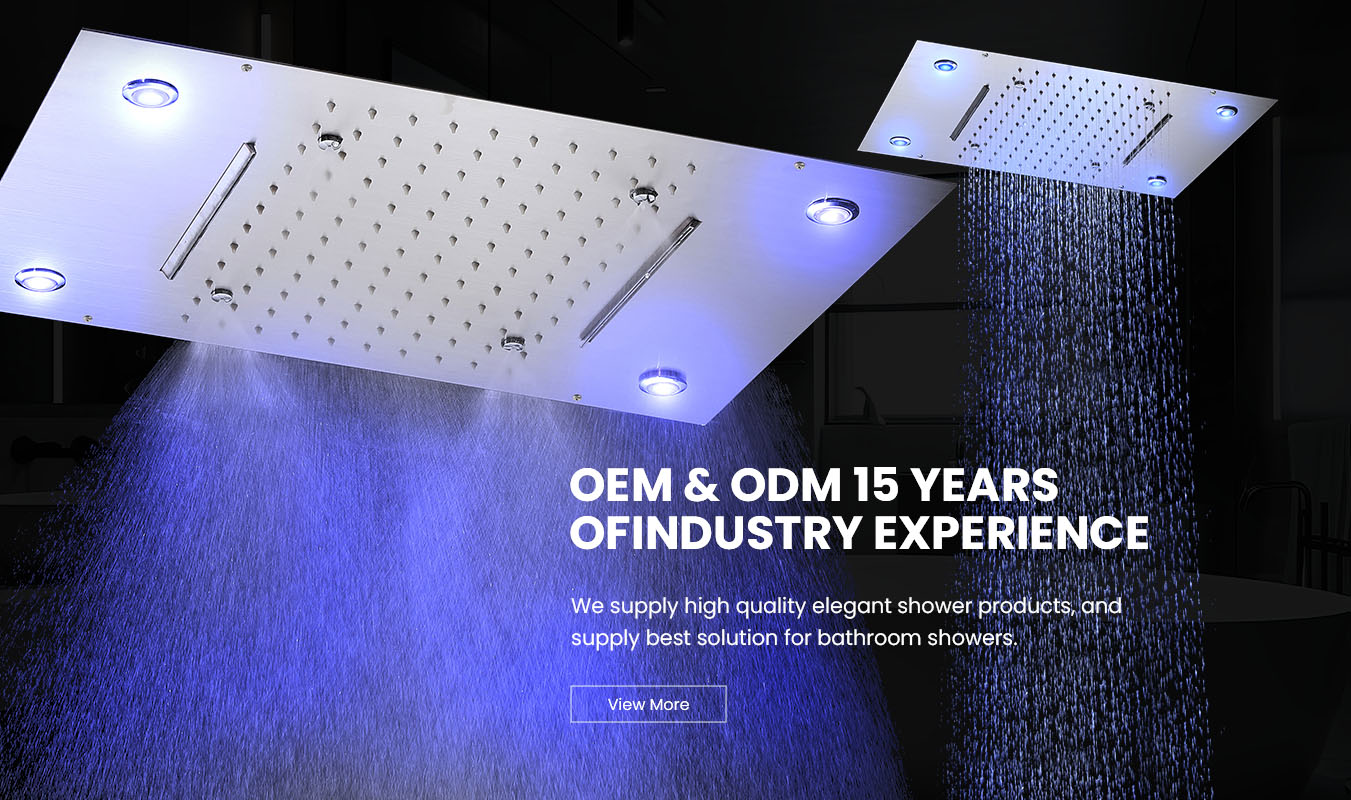
Material selection is one of the most important decisions when developing a reliable ceiling shower system. In hotels, villas, resorts, and premium residential projects, shower products must withstand continuous water exposure, humidity, cleaning chemicals, and frequent daily use.
Among different materials, stainless steel ceiling showers and brass ceiling showers are two widely used solutions. Both materials have their own advantages, but their performance differs in corrosion resistance, durability, maintenance requirements, manufacturing flexibility, and application scenarios.
As an experienced ceiling shower head manufacturer, EMYSA specializes in Stainless Steel Shower Heads, brass shower systems, concealed shower solutions, and customized bathroom products. With OEM and ODM capabilities, EMYSA provides factory-controlled manufacturing, material management, and quality inspection systems for international bathroom projects.
The main difference between stainless steel and brass ceiling showers comes from the material structure.
Stainless steel is an alloy containing chromium, which creates a passive protective layer that helps improve corrosion resistance. Brass is a copper and zinc alloy known for its strength, durability, and excellent processing performance.
| Comparison | Stainless Steel Ceiling Shower | Brass Ceiling Shower |
|---|---|---|
| Material Feature | Chromium-based corrosion resistance | Copper-zinc alloy structure |
| Durability | Excellent for humid environments | Excellent structural strength |
| Appearance | Modern and clean style | Premium and classic appearance |
| Maintenance | Easy daily maintenance | Requires finish protection |
| Common Applications | Hotels, modern bathrooms, commercial projects | Luxury bathrooms, premium projects |
The best choice depends on the project environment, design requirements, and expected service conditions.
Stainless steel has become a popular material for modern bathroom products because of its durability and clean appearance.
The biggest advantage of stainless steel is its resistance to corrosion.
Stainless steel contains chromium, which forms a thin passive oxide layer on the surface. This protective layer helps prevent further corrosion when the surface is exposed to moisture.
This makes stainless steel ceiling showers suitable for:
Hotel bathrooms
Resort projects
Coastal properties
Commercial facilities
For environments with frequent water exposure, stainless steel provides stable long-term performance.
Stainless steel ceiling showers match contemporary bathroom designs.
They are commonly used with:
Large format tiles
Minimalist interiors
Modern luxury bathrooms
The clean metallic appearance creates a premium visual effect.
Stainless steel surfaces are easy to clean and maintain.
Advantages include:
Resistance to rust
Stable surface appearance
Easy daily cleaning
Long service life
For commercial projects, lower maintenance requirements can help reduce long-term operating costs.
EMYSA's stainless steel ceiling shower products use stainless steel structures with different sizes and finishes to support various bathroom applications. (globalemysa.com)
Brass remains a popular material for premium bathroom products because of its strength and manufacturing advantages.
Brass has strong mechanical properties and is widely used for bathroom components requiring reliable structures.
It provides advantages such as:
Stable product structure
Good machining performance
Strong connection reliability
This makes brass suitable for:
Luxury hotels
High-end villas
Premium bathroom collections
Brass products can achieve elegant finishes through surface treatment.
Common finishes include:
Brushed gold
Polished gold
Chrome plating
Matte finishes
These finishes help create luxury bathroom styles.
From a manufacturing perspective, brass provides good processing flexibility.
It can support:
Complex shapes
Detailed components
Customized designs
This makes brass suitable for projects requiring unique product designs.
Both stainless steel and brass can provide long service life when manufactured correctly.
However, durability depends on:
Material grade
Production process
Surface treatment
Installation environment
Quality control
| Factor | Stainless Steel | Brass |
|---|---|---|
| Humidity Resistance | Excellent | Excellent |
| Corrosion Protection | High | High |
| Structural Strength | High | High |
| Surface Options | Multiple finishes | Premium finishes |
| Maintenance Needs | Low | Moderate |
For humid environments with frequent water exposure, high-quality stainless steel provides excellent corrosion resistance. Brass also performs well when properly processed and finished.
Professional manufacturers do not only choose materials based on appearance. Material standards directly influence product performance.
Important factors include:
| Material Factor | Importance |
|---|---|
| Stainless Steel Grade | Determines corrosion resistance |
| Brass Composition | Influences durability |
| Surface Treatment | Protects appearance |
| Component Quality | Ensures stable operation |
For stainless steel products, common grades such as SUS304 are widely used in bathroom applications because of their corrosion resistance and forming performance.
For brass products, manufacturers need to control alloy composition and surface treatment quality to ensure long-term reliability.
Different bathroom projects require different materials, sizes, and designs.
A professional OEM shower manufacturer should provide customization options including:
| Customization Type | Application |
|---|---|
| Material Selection | Match project requirements |
| Shower Size | Adapt bathroom layout |
| Shape Design | Support interior concepts |
| Surface Finish | Match design style |
| Water Function | Improve user experience |
The OEM and ODM development process usually includes:
Project requirement analysis
Engineering evaluation
Product design
Prototype development
Performance testing
Mass production
A manufacturer with engineering capability can recommend suitable materials based on project conditions.
A reliable bathroom hardware manufacturer needs strict control over every production stage.
The manufacturing process generally includes:
Raw materials are checked before production.
Inspection focuses on:
Material grade
Thickness
Surface quality
Production procedures include:
Cutting
Stamping
Welding
Machining
Polishing
Surface finishing improves:
Appearance
Corrosion resistance
Product durability
Finished ceiling showers are tested for:
Water flow performance
Leakage prevention
Structural stability
Surface quality
Material selection combined with precise manufacturing determines final product reliability.
For large commercial projects, quality consistency is essential.
Professional factories inspect:
| Inspection Stage | Focus |
|---|---|
| Material Inspection | Confirm material standards |
| Processing Inspection | Check manufacturing accuracy |
| Surface Inspection | Verify finish quality |
| Water Testing | Test shower performance |
| Final Inspection | Approve shipment |
For ceiling shower products, manufacturers also need to check:
Panel flatness
Nozzle distribution
Connection stability
Installation compatibility
EMYSA applies quality control throughout production to maintain consistent product performance.
Hotels and property developments usually require hundreds or thousands of shower products with consistent specifications.
A reliable shower system manufacturer should provide:
Stable production capacity
Consistent material quality
Flexible customization
Professional packaging
Export support
Project sourcing should consider:
| Evaluation Item | Importance |
|---|---|
| Production Capability | Ensures delivery stability |
| Material Control | Maintains product durability |
| Quality System | Reduces product differences |
| Engineering Support | Improves customization efficiency |
Factory-controlled production provides stronger control over large-volume supply.
International bathroom projects often require manufacturers to meet different market standards.
Important considerations include:
Material requirements
Product testing
Water performance
Packaging standards
Technical documentation
EMYSA supports international markets including Europe and Australia and has experience with certification requirements such as WRAS for specific products. (globalemysa.com)
The right material depends on project requirements.
| Application | Recommended Material |
|---|---|
| Modern Hotel Bathroom | Stainless Steel |
| Coastal Project | Stainless Steel |
| Luxury Villa | Brass |
| Premium Customized Bathroom | Brass or Stainless Steel |
| Large Commercial Project | Stainless Steel |
Stainless steel ceiling showers are ideal for projects focusing on corrosion resistance, easy maintenance, and modern design.
Brass ceiling showers are suitable for projects that require premium appearance, strong structure, and customized designs.
The lifespan of a ceiling shower depends not only on the material but also on manufacturing capability, quality control, and engineering experience.
A professional manufacturer should provide:
Reliable material selection
Advanced production processes
OEM and ODM support
Strict quality inspection
Export project experience
As a professional Ceiling Shower Head manufacturer, EMYSA combines factory-controlled production, customized development capability, material management, and quality systems to provide reliable shower solutions for hotels, villas, residential projects, and commercial bathrooms worldwide.