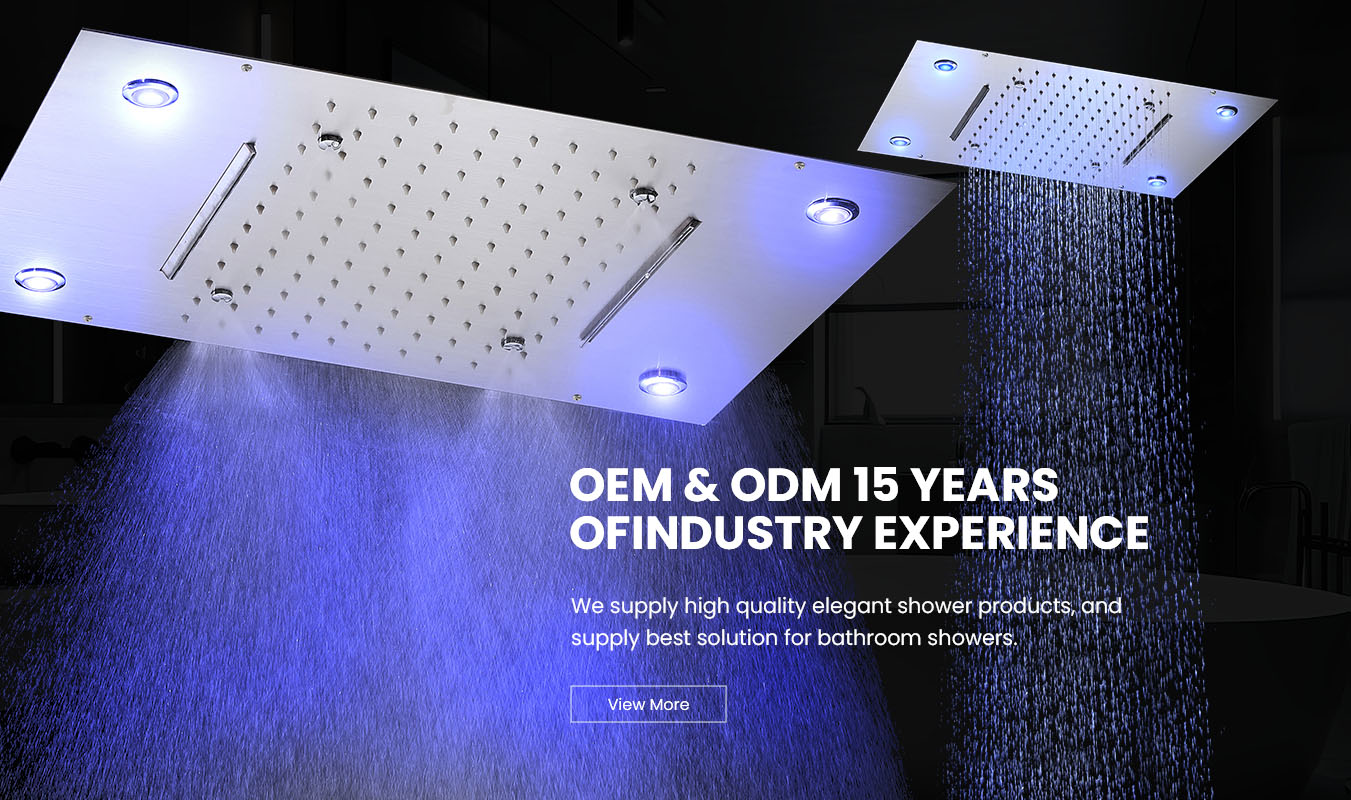
Low shower pressure is not always caused by the shower head itself. In many projects, the real reasons are a weak water supply system, unsuitable product selection, blocked nozzles, narrow internal waterways, or mismatched valve and pipe design. For buyers sourcing shower products in bulk, this matters because water pressure performance is shaped by both engineering design and manufacturing quality. EMYSA focuses on Brass Shower Head, Stainless Steel Shower Head, Concealed Shower Mixer, and related shower fittings, with products mainly exported to Europe and Australia and WRAS-related market experience.
Before trying to increase pressure, buyers should separate system pressure from product flow performance. If the building pressure is already low, changing the shower head alone may not solve the problem. Older U.S. federal guidance notes that if water pressure is below 40 psi, some low-flow showerheads may not perform satisfactorily, while pressure above 80 psi can push flow beyond allowed limits. Federal standards in the United States also cap showerheads at no more than 2.5 gallons per minute, so pressure improvement today is usually about better water delivery and spray design, not simply allowing more flow.
A strong shower system production process directly affects the final user experience. Water pressure can feel weak when internal channels are rough, nozzles are inconsistent, sealing parts are misaligned, or machining tolerance is unstable. In a professional manufacturing process overview, product performance depends on material selection, casting or forming, CNC machining, polishing, finishing, assembly, and function testing. This is where manufacturer vs trader becomes important. A manufacturer can control internal passage design, machining accuracy, and assembly consistency more directly, while a trader often relies on outside factories for technical corrections. EMYSA’s category focus gives it a stronger base for shower parts manufacturing and direct production coordination.
Material quality affects more than durability. It also influences how well a shower product maintains performance over time. Brass valve bodies and SUS304 stainless steel shower components are widely valued because they support stable machining, corrosion resistance, and long service life. EMYSA states that its Concealed Rain Shower uses SUS304 stainless steel, a brass valve body, and food-grade silicone nozzles with automatic descaling. That combination matters because blocked nozzles and internal corrosion are common reasons shower pressure feels weaker after use. For export projects, material compliance is also essential. The EPA says lead-free plumbing products must not exceed a weighted average of 0.25 percent lead across wetted surfaces.
Good pressure performance depends on consistent quality control checkpoints. Buyers should confirm machining inspection, nozzle consistency, leak testing, pressure testing, and final assembly checks before approving bulk supply. WRAS approval listings for shower outlets and valves show that approved products are commonly tied to defined operating conditions such as maximum working pressures of 5.0 bar or 10.0 bar and maximum operating temperatures of 60°C in certain product configurations. Those figures show why pressure-related performance should be tested as part of production control instead of being treated as a sales claim.
In the OEM / ODM process, pressure improvement usually comes from design optimization rather than one simple change. Buyers can work with a factory to adjust spray hole layout, nozzle size, water channel design, valve matching, and faceplate structure. This is especially useful when the product is being developed for markets that expect strong spray feeling under restricted flow conditions. A proper OEM shower components workflow should include requirement confirmation, engineering review, sample validation, functional testing, packaging approval, and pilot production before full release. That process gives more room to solve low-pressure complaints before goods reach the market.
For bulk shower components supply, buyers should not ask only whether the product looks good. They should ask whether the shower head performs well under the target pressure range, whether the nozzles resist clogging, whether the valve body is stable, and whether repeated batches hold the same spray performance. A practical project sourcing checklist can look like this:
| Focus area | What to confirm |
|---|---|
| System match | Building pressure range and valve compatibility |
| Product design | Waterway structure, nozzle layout, spray balance |
| Material control | Brass body, stainless steel grade, silicone quality |
| Quality testing | Leak test, pressure test, spray consistency |
| Export readiness | Lead-free compliance, WRAS-related market needs |
Export market compliance can affect both sourcing and design decisions. In the United States, flow limits and lead-free rules shape what can be sold. In regulated water markets, approval expectations may also influence product structure and test planning. For buyers sourcing internationally, this is another reason why a direct manufacturer is often better than a trader for technical projects. EMYSA’s export focus, product specialization, and manufacturer positioning make it better suited to support design review, quality checkpoints, and repeat supply for overseas shower sourcing.
The most effective answer is not to chase the highest flow number. It is to match the right shower design to the actual water system, use reliable materials, define clear testing standards, and work with a supplier that controls production details. In real projects, better pressure performance usually comes from better engineering, better tolerance control, and better sample validation. That is why shower pressure is not only a plumbing issue. It is also a manufacturing issue, and EMYSA’s product range and factory-based model make that process easier to manage from development to bulk delivery.