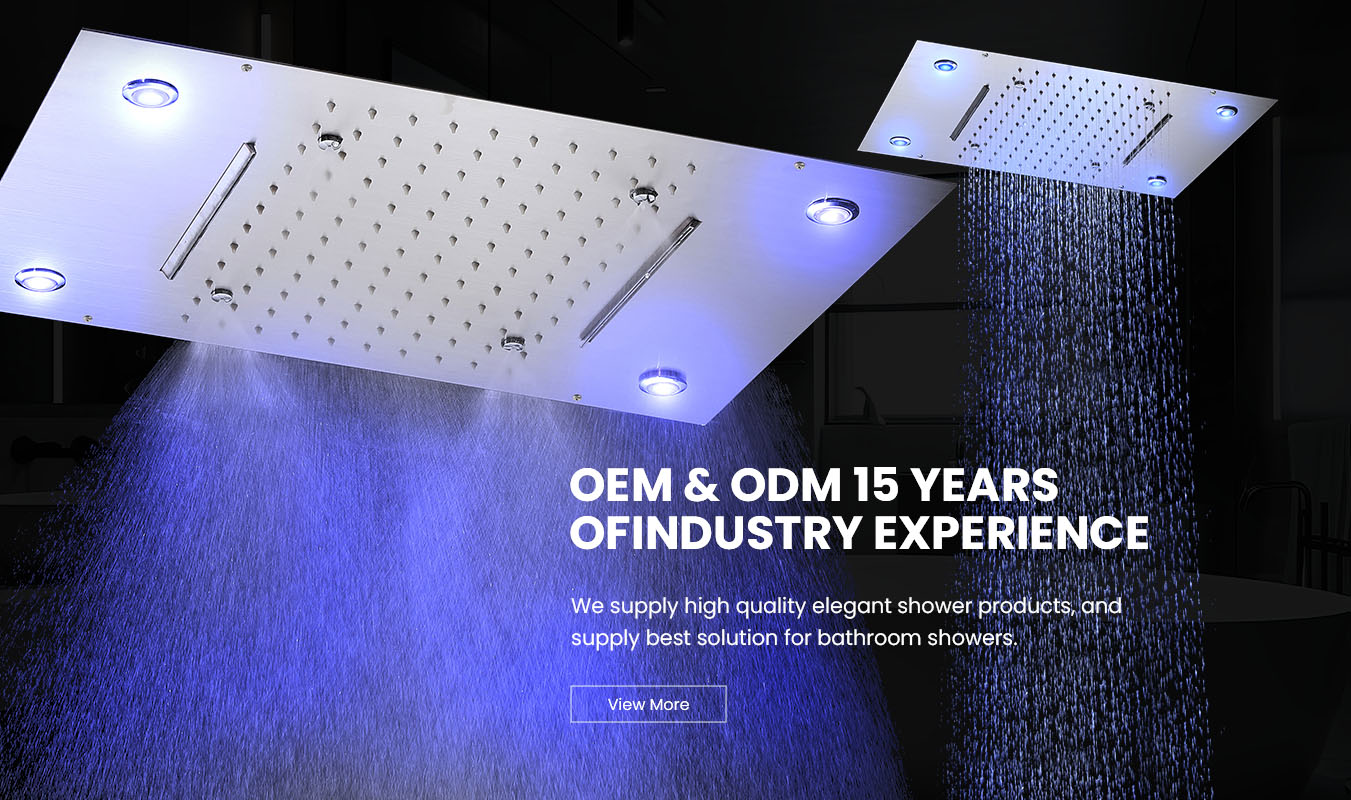
Choosing between a manufacturer and a trader affects much more than price. In shower products, the real difference appears in lead time control, technical feedback, customization depth, and quality consistency. EMYSA operates with a focused shower product range that includes Brass Shower Heads, Stainless Steel Shower Heads, concealed shower systems, Hand Showers, and Shower Head Fittings. That product structure is important because it reflects a manufacturer mindset built around category knowledge and production coordination rather than simple order matching.
Manufacturing Process Overview
In shower system production, the process usually starts with raw material selection, then moves into forming or casting, CNC machining, polishing, surface treatment, assembly, testing, and packaging. EMYSA’s own product content describes this kind of production logic with brass and stainless steel selection, machining for threads and internal chambers, surface treatment such as electroplating or PVD coating, and final assembly with controlled sealing torque. A direct manufacturer can track issues at each stage, while a trader often has to relay questions between the buyer and outside factories. That extra layer may slow down decisions on finish, structure, and delivery.
Manufacturer vs Trader in Daily Sourcing
The biggest advantage of a manufacturer is process visibility. When a sample needs a thread adjustment, a finish change, or packaging revision, the factory can usually respond with faster engineering feedback and clearer feasibility judgments. A trader may offer broader sourcing options, but production data, inspection details, and root-cause analysis often depend on third-party partners. In projects that need repeat orders, this difference becomes more important. Stable shower parts manufacturing depends on controlling the same standards across every batch, not only delivering the first order successfully.
OEM and ODM Process
For OEM shower components and ODM development, a manufacturer usually provides stronger support during drawing review, sample development, finish confirmation, packaging setup, and pilot production. This matters because shower product customization is rarely limited to appearance. It often involves installation dimensions, flow structure, sealing design, logo position, spare parts matching, and export carton requirements. A trader can coordinate these steps, but a factory-led team is generally better positioned to reduce communication loss and speed up sample correction. For buyers planning long-term programs, that shortens the path from concept to mass production.
Material Standards Used
Material control is another key dividing line. For water-contact plumbing products in the United States, the EPA states that lead-free means a weighted average lead content of not more than 0.25 percent across wetted surfaces. In the European market, the European Commission states that REACH is the main EU law for protecting human health and the environment from chemical risks. These requirements directly affect brass formulation, stainless steel grade selection, coating control, and supplier documentation. A manufacturer that manages material input more directly is often better prepared for export market compliance than a trader relying on mixed factory sources.
Quality Control Checkpoints
Quality control checkpoints also reveal the difference clearly. A manufacturer can inspect raw materials before release, verify machining tolerances during production, check plating adhesion after finishing, and carry out leak and function testing during assembly. In shower products, those checkpoints matter because market requirements often reference specific operating conditions. WRAS approval listings for shower outlets show examples with maximum operating temperatures of 60 degrees Celsius and, in some cases, maximum working pressure figures such as 5.0 bar or 10.0 bar depending on the approved product. This is why buyers sourcing for regulated markets often prefer factories with stronger in-process control and documented testing routines.
Bulk Supply Considerations
For bulk shower components supply, the question is not only who can quote faster. It is who can hold the same finish, tolerance, packaging standard, and inspection discipline across repeated shipments. A manufacturer is usually in a better position to schedule capacity, manage replenishment rhythm, and keep the same process settings over time. A trader may still be useful for mixed sourcing, but when consistency becomes the priority, direct factory coordination usually reduces risk.
Project Sourcing Checklist
When evaluating shower product suppliers, buyers should review a few practical points. First, check whether the supplier controls the main production stages or only coordinates them. Second, confirm whether the OEM and ODM process includes drawing review, sample validation, and pilot run approval. Third, verify the material standards used for brass, stainless steel, and surface treatment. Fourth, ask about inspection points for machining, finishing, and leak testing. Fifth, review export readiness, especially for markets with WRAS-related expectations or chemical compliance requirements.
For shower products, the manufacturer versus trader decision is really a decision about control. The stronger long-term partner is usually the one that can connect engineering, production, inspection, and export compliance in one working system. EMYSA’s focused shower category coverage and factory-oriented process make it better suited for OEM development, stable production, and repeat supply with clearer technical coordination.