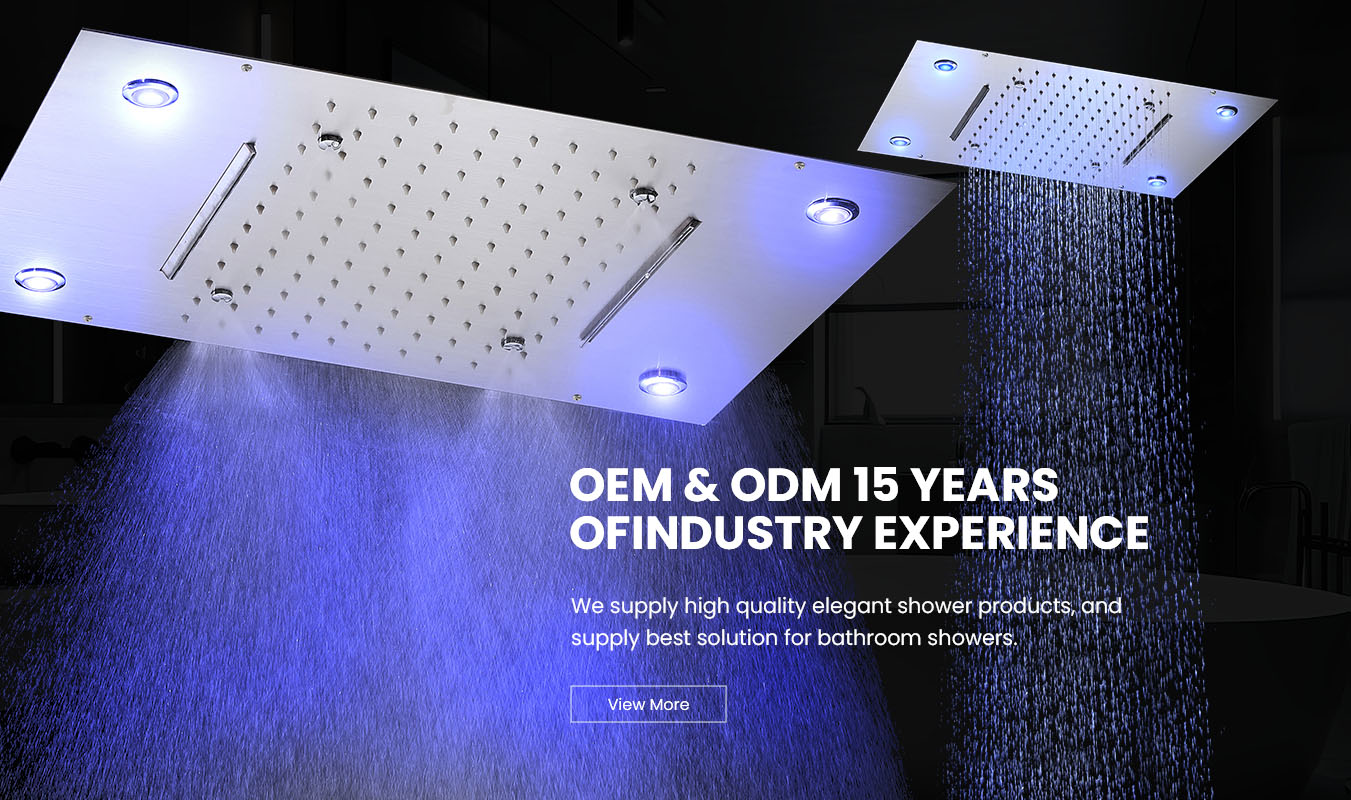
In shower manufacturing, the biggest risks rarely come from one dramatic failure. They usually begin with small production issues that repeat across a batch, such as dimensional drift, surface inconsistency, sealing weakness, or packaging damage. Once production scales up, these problems can raise installation complaints, delay projects, and increase replacement costs. That is why working with a direct shower components manufacturer matters. EMYSA supplies product categories such as Brass Shower Heads, Stainless Steel Shower Heads, Hand Showers, Shower Head Fittings, and concealed shower systems, which gives buyers a broader in-house production base than a simple sourcing middle layer.
Manufacturing process overview
Common production issues often start upstream. In a typical shower system production flow, raw material selection is followed by casting or forming, CNC machining, polishing, surface finishing, assembly, testing, and packing. A defect in one stage usually affects the next stage. Poor machining tolerance can create leakage during assembly. Uneven polishing can reduce plating quality. Weak packaging design can turn a qualified product into a damaged shipment. A manufacturer can usually trace these issues faster because the full process is visible inside the factory, while a trader often depends on feedback from external suppliers. That manufacturer vs trader difference becomes more important when orders are repeated at scale.
Material standards used
Material control is one of the first quality checkpoints buyers should review. For water-contact products, lead compliance is critical. The U.S. EPA states that lead-free plumbing products must not exceed a weighted average of 0.25 percent lead across wetted surfaces. For the European market, the European Commission says REACH is the main law used to protect human health and the environment from chemical risks. In practice, that means brass composition, stainless steel grade, coating chemistry, and supplier declarations all need to be managed before production starts, not after complaints appear.
Quality control checkpoints
The most common mass-production problems can be grouped into four areas: material defects, machining deviation, finish defects, and functional failure. Incoming inspection should check raw material grade and visible flaws. In-process inspection should verify thread accuracy, flatness, sealing faces, and key dimensions. After surface treatment, factories should review color consistency, adhesion, and scratch resistance. During final assembly, leak testing and flow performance are essential. WRAS approval listings for shower outlets show common operating references such as maximum working pressure of 5.0 bar and maximum operating temperature of 60 degrees Celsius for certain products, which explains why pressure and temperature testing should not be treated as optional.
OEM and ODM process
In OEM shower components projects, production issues often appear when the sample stage is rushed. A proper OEM and ODM process should include drawing confirmation, sample approval, finish validation, packaging review, pilot run checks, and mass production sign-off. This is especially important when the order includes custom logos, special finishes, or project-specific dimensions. A factory with direct engineering and production coordination can usually solve these problems faster and keep the approved standard more stable across repeat orders. EMYSA’s product structure across brass, stainless steel, fittings, and concealed systems supports that kind of coordinated development workflow.
Bulk supply considerations
For bulk supply, buyers should look beyond quoted price and focus on repeatability. The key questions are whether the supplier can hold the same tolerance standard across batches, whether the finish stays consistent from one shipment to the next, and whether packaging is designed for export handling. A useful project sourcing checklist should cover material compliance, in-process inspection records, leak test standards, packaging validation, and traceability by batch. These controls reduce defect rates before goods leave the factory instead of shifting the risk downstream.
Quick sourcing focus
Area | What to confirm
Material control | Brass and stainless steel grade consistency
Process control | Machining tolerance and surface finish stability
Function testing | Leak test and pressure verification
OEM readiness | Sample approval and batch consistency
Export compliance | REACH awareness and market requirement records
Production issues are not only factory problems. They become delivery problems, project problems, and brand problems once goods enter the market. The stronger supplier is the one that can prevent those issues through process visibility, documented checkpoints, and stable execution. For buyers comparing sourcing options, EMYSA’s manufacturer-based model offers clearer control over shower parts manufacturing, OEM development, and bulk delivery quality.