
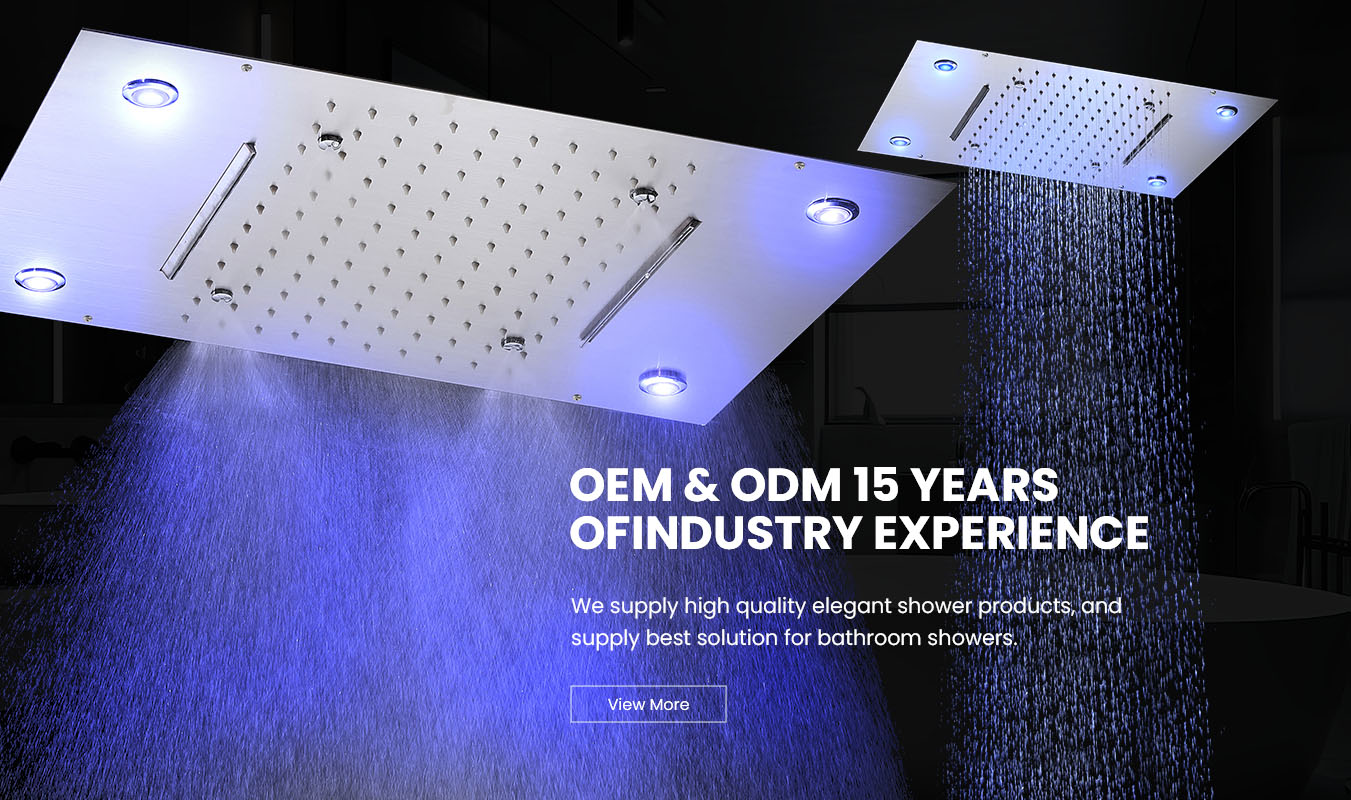
Scale changes everything in shower production. A factory that can make thousands of units with stable quality is not simply running bigger machines. It is controlling raw materials, machining precision, surface finishing, assembly rhythm, and inspection standards in one connected workflow. That is also where the difference between a manufacturer and a trader becomes clear. EMYSA positions itself as a shower components manufacturer with product lines including Brass Shower Heads, Stainless Steel Shower Heads, Concealed Shower Systems, Hand Showers, and related fittings, which supports more direct production control and technical coordination for repeat orders.
The manufacturing process overview usually starts with product breakdown. Shower components are divided into brass bodies, stainless steel panels or heads, connectors, holders, rails, nozzles, seals, cartridges, and decorative parts. Brass parts are often selected for valves, holders, and concealed bodies because they are stable in machining and suitable for electroplating. Stainless steel is commonly used for visible shower surfaces that need corrosion resistance and a clean appearance. EMYSA’s current product structure reflects this combination of brass and stainless steel categories, which is important for bulk shower components supply across different market needs.
For large orders, the difference between a manufacturer and a trader becomes highly visible. A manufacturer controls production schedules, tooling adjustments, and quality checkpoints internally. This leads to faster response times and more consistent output. A trader often relies on multiple factories, which can create delays in communication and variations in product quality. For long-term cooperation and stable delivery, working directly with a shower components manufacturer provides better traceability and efficiency.
For OEM shower components projects, the process should be structured from the beginning. A reliable factory normally moves through requirement confirmation, drawing review, sampling, finish approval, functional testing, packaging validation, pilot production, and mass production release. This matters because OEM and ODM work is not only about shape customization. It also includes thread standards, finish consistency, logo method, carton layout, and spare parts planning. Buyers sourcing for long programs benefit from a partner that integrates engineering with production execution.
Material standards used in water-contact products are a critical checkpoint. In the United States, the EPA states that lead-free plumbing products must meet a weighted average lead content of no more than 0.25 percent across wetted surfaces, and NSF/ANSI/CAN 372 is commonly applied. In Europe, REACH regulations control chemical safety to protect human health and the environment. These requirements influence material selection, especially for brass components and surface treatments. Choosing compliant materials ensures smoother entry into regulated markets and reduces long-term risk.
Quality control should be embedded throughout the entire production line. Key checkpoints include incoming material inspection, CNC machining accuracy verification, polishing consistency checks, plating adhesion testing, leak testing, pressure testing, spray performance evaluation, and final packaging inspection. WRAS approval examples show that shower components must operate reliably under specific conditions such as defined pressure and temperature limits. This highlights the importance of continuous monitoring and standardized testing during production.
Bulk supply considerations go beyond unit pricing. Buyers need stable lead times, consistent product finishes, reliable packaging, and flexible replenishment capability. Production capacity and scheduling discipline directly affect delivery reliability. A manufacturer with integrated production processes can better handle repeat orders, specification adjustments, and urgent shipments, which is essential for project continuity.
Export market compliance is a key factor in global sourcing. Certifications such as WRAS for water-related products and REACH for chemical safety are commonly required in European markets. Meeting these standards requires proper documentation, material control, and testing procedures. A manufacturer familiar with export regulations can streamline the approval process and reduce compliance risks.
Focus Area | What Buyers Should Confirm
Production control | In-house process visibility and stable capacity
OEM capability | Sampling speed and customization flexibility
Material compliance | Verified brass and stainless steel standards
Quality system | Multi-stage inspection and performance testing
Export readiness | Packaging standards and certification support
At scale, shower parts manufacturing is about repeatability and control. The most reliable supplier is the one that can transform technical requirements into consistent production results, supported by clear quality systems and export-ready processes. EMYSA’s manufacturer-based approach supports OEM development, bulk supply stability, and long-term project execution with greater efficiency.