
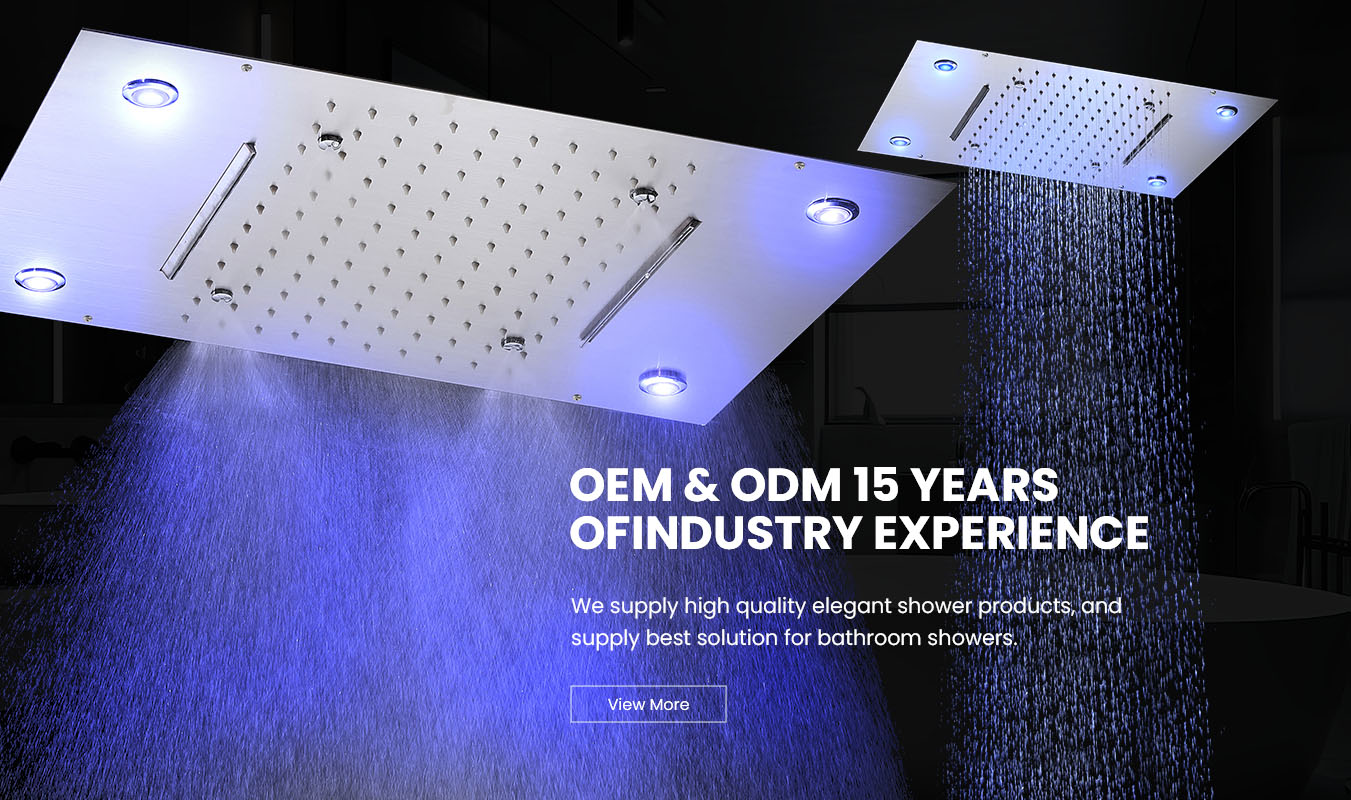
Vinegar soaking is one of the most effective ways to remove mineral buildup from a shower head. However, the soaking time must be carefully controlled based on material type, coating quality, and manufacturing standards. Excessive soaking can damage finishes or internal components, especially in lower-quality products.
Recommended Soaking Time by Material
The correct duration depends on the construction of the shower head:
Stainless Steel or Solid Brass Shower Heads
Recommended time: 30–60 minutes
These materials have strong corrosion resistance and can tolerate longer exposure without structural damage
Chrome-Plated or Coated Shower Heads
Recommended time: 20–30 minutes
Over-soaking may weaken the plating layer, especially if surface treatment is not uniform
Plastic or Composite Shower Heads
Recommended time: 15–20 minutes
Extended soaking can cause material softening or internal deformation
From a manufacturing perspective, higher-grade surface treatments such as multi-layer electroplating or PVD coatings provide better resistance to mild acids like vinegar.
Why Vinegar Works
Vinegar contains acetic acid, which dissolves calcium and magnesium deposits commonly found in hard water.
Breaks down limescale inside nozzles
Restores uniform water flow
Reduces pressure imbalance and potential leakage
In well-engineered shower heads, nozzle design allows easier cleaning without damaging internal structures.
Proper Cleaning Procedure
Step 1: Disassemble or Attach Bag
Remove the shower head if possible, or secure a bag filled with vinegar around it.
Step 2: Soak Within Recommended Time
Avoid exceeding the recommended duration to protect coatings and seals.
Step 3: Rinse Thoroughly
Flush with clean water to remove loosened deposits.
Step 4: Brush Nozzles Gently
Use a soft brush to clear remaining residue without scratching the surface.
Manufacturer vs Trader: Impact on Cleaning Durability
Cleaning tolerance varies significantly depending on supplier type.
| Criteria | Manufacturer | Trader |
|---|---|---|
| Surface Treatment | Multi-layer controlled process | Basic coating |
| Material Purity | Verified standards | Variable |
| Acid Resistance | Tested | Not guaranteed |
| Long-Term Durability | Stable | Inconsistent |
Factory-produced shower heads are designed to withstand routine cleaning without degradation.
OEM / ODM Considerations for Easy Maintenance
Professional manufacturers integrate cleaning-friendly designs during development:
Design Features
Anti-clog silicone nozzles
Smooth internal flow channels
Removable components for maintenance
Material Selection
Corrosion-resistant alloys
High-grade plating thickness control
Chemical-resistant sealing materials
Testing Standards
Chemical exposure testing
Surface adhesion testing
Repeated cleaning cycle validation
This ensures that products maintain performance after repeated maintenance.
Manufacturing Process Overview
A high-quality shower head designed for durability and easy cleaning typically includes:
Precision casting or forming of metal components
CNC machining for internal channels
Multi-layer electroplating or advanced coating processes
Assembly with chemical-resistant seals
Final inspection and performance testing
Consistent process control ensures resistance to corrosion and cleaning chemicals.
Quality Control Checkpoints
To guarantee cleaning durability, manufacturers implement:
Surface Inspection
Coating thickness measurement
Adhesion testing
Material Testing
Corrosion resistance verification
Chemical exposure simulation
Functional Testing
Flow rate consistency after cleaning
Nozzle anti-clog performance
These steps ensure long-term usability even under frequent maintenance.
Material Standards Used
Material selection directly affects vinegar resistance:
Brass (Cu≥59%) for structural stability
304 Stainless Steel for corrosion resistance
Silicone nozzles for anti-clog performance
High-quality plating layers for surface protection
Lower-grade materials are more likely to discolor, peel, or degrade after repeated soaking.
Bulk Supply Considerations
For large-scale procurement, maintenance performance is critical:
Consistency of coating quality across batches
Resistance to cleaning chemicals
Long-term appearance retention
Reduced after-sales maintenance issues
Stable manufacturing ensures predictable product lifespan in real-world use.
Project Sourcing Checklist
When selecting shower heads for projects:
Verify coating thickness and type
Confirm material corrosion resistance
Check anti-clog nozzle design
Evaluate cleaning and maintenance requirements
Assess supplier quality control capability
This helps reduce maintenance costs in residential and commercial environments.
Export Market Compliance
Export-oriented manufacturers align with international standards:
Corrosion resistance testing requirements
Material safety compliance
Surface durability benchmarks
These ensure that products perform reliably across different water conditions.
Conclusion
The ideal vinegar soaking time typically ranges from 15 to 60 minutes, depending on material and coating quality. While vinegar is effective for removing buildup, excessive exposure can damage low-quality finishes and seals.
From a manufacturing perspective, products built with high-grade materials and controlled surface treatments offer better resistance to cleaning processes and maintain performance over time. For project buyers and bulk procurement, selecting such products ensures easier maintenance and longer service life.