
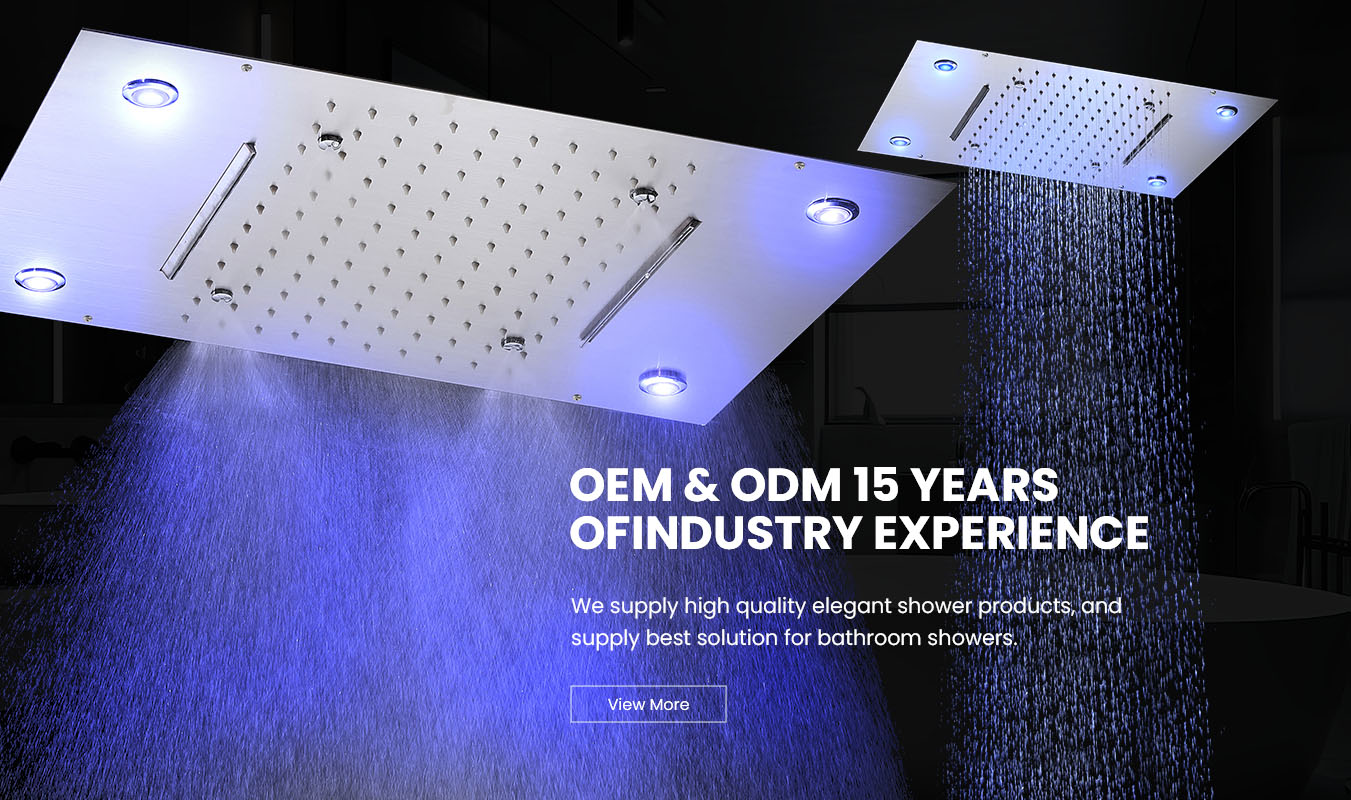
A squealing shower is more than a minor annoyance. It often indicates issues in water flow control, internal component wear, or material inconsistencies. From a manufacturing perspective, these sounds are typically linked to pressure imbalance, valve structure, and precision of internal parts.
Understanding the root cause helps not only with quick fixes but also with evaluating product quality for long-term use or bulk procurement.
Common Causes of Shower Squealing
High Water Pressure Instability
When water pressure exceeds the designed range, internal components vibrate under force. Most shower systems are engineered for 0.1–0.5 MPa, and exceeding this range can create high-frequency noise.
Worn or Loose Internal Components
Degraded rubber washers
Loose valve cartridges
Aging diverter mechanisms
These components lose elasticity or alignment over time, causing vibration during water flow.
Poor Cartridge or Valve Design
Low-precision cartridges often fail to regulate flow smoothly. This leads to turbulence and resonance inside the valve body, producing squealing sounds.
Mineral Buildup Inside Flow Channels
Hard water deposits narrow internal passages, increasing flow velocity and creating whistling or squealing noise.
How to Fix a Squealing Shower
Adjust Water Pressure
Install or regulate a pressure-reducing valve if pressure is above recommended levels. Stable pressure eliminates most vibration-related noise.
Replace Worn Components
Upgrade to high-quality silicone or EPDM seals and precision cartridges. These materials maintain elasticity and reduce friction.
Clean Internal Deposits
Soaking components removes mineral buildup and restores smooth water flow.
Inspect Valve and Diverter System
If noise persists, the issue is often inside the valve body. Replacing the cartridge with a precision-engineered unit is the most effective solution.
Manufacturer vs Trader: Impact on Noise Control
Noise performance is closely tied to engineering capability.
| Criteria | Manufacturer | Trader |
|---|---|---|
| Valve Design | Engineered for smooth flow | Standard off-the-shelf |
| Pressure Testing | Multi-stage testing | Limited or none |
| Component Precision | CNC-machined | Inconsistent sourcing |
| Noise Control Optimization | Integrated in design | Not controlled |
Factory-based production ensures that water flow remains stable and quiet across different usage conditions.
OEM / ODM Process for Low-Noise Shower Systems
Professional manufacturers follow structured development to eliminate noise issues:
Engineering Optimization
Internal flow channel design to reduce turbulence
Cartridge balancing for smooth pressure transition
Acoustic testing during design phase
Prototype Validation
Pressure fluctuation simulation
Flow noise testing under different conditions
Durability testing over 100,000 cycles
Production Control
Precision machining for valve components
Consistent seal installation torque
Controlled assembly environment
This ensures stable and quiet operation even in high-use environments.
Manufacturing Process Overview
Producing a low-noise shower system involves:
Brass casting or stainless steel forming
CNC machining for internal flow channels
Surface finishing for corrosion resistance
Cartridge integration and sealing
Final assembly with calibrated torque
High-quality factories maintain tight tolerances to prevent vibration and resonance inside the product.
Quality Control Checkpoints
Noise-related defects are controlled through:
Component Inspection
Dimensional accuracy of cartridges
Seal elasticity and fit testing
Functional Testing
Water flow simulation under different pressures
Noise detection during operation
Final Inspection
Leak and pressure testing
Assembly consistency checks
These checkpoints ensure stable performance across bulk production.
Material Standards Used
Material quality plays a critical role in reducing noise:
Brass (Cu≥59%) for structural stability
304 Stainless Steel for corrosion resistance
High-grade polymer cartridges for smooth operation
Silicone seals for vibration absorption
Low-grade materials tend to deform or harden, increasing friction and noise over time.
Bulk Supply Considerations
For large-scale procurement, noise consistency is essential:
Uniform cartridge quality across batches
Stable pressure performance
Verified testing reports for each production lot
Reliable supplier with controlled manufacturing
Inconsistent supply often leads to varied user experiences and increased after-sales issues.
Project Sourcing Checklist
When selecting shower systems for projects:
Check pressure tolerance specifications
Verify cartridge design and lifespan
Ensure anti-noise flow structure
Confirm material and certification compliance
Evaluate supplier production capability
This reduces maintenance risks in residential and hospitality installations.
Export Market Compliance
Export-oriented manufacturers align with international standards:
Water safety compliance requirements
Pressure and durability certifications
Material safety and corrosion resistance standards
Meeting these requirements ensures compatibility with different plumbing systems and operating conditions.
Conclusion
A squealing shower is usually a result of pressure imbalance, internal wear, or poor engineering design. While temporary fixes can reduce the noise, long-term performance depends on manufacturing precision, material quality, and proper flow control design.
For project buyers and bulk sourcing, selecting a manufacturer with strong engineering capability and strict quality control is essential to ensure quiet, stable, and reliable shower system performance over time.