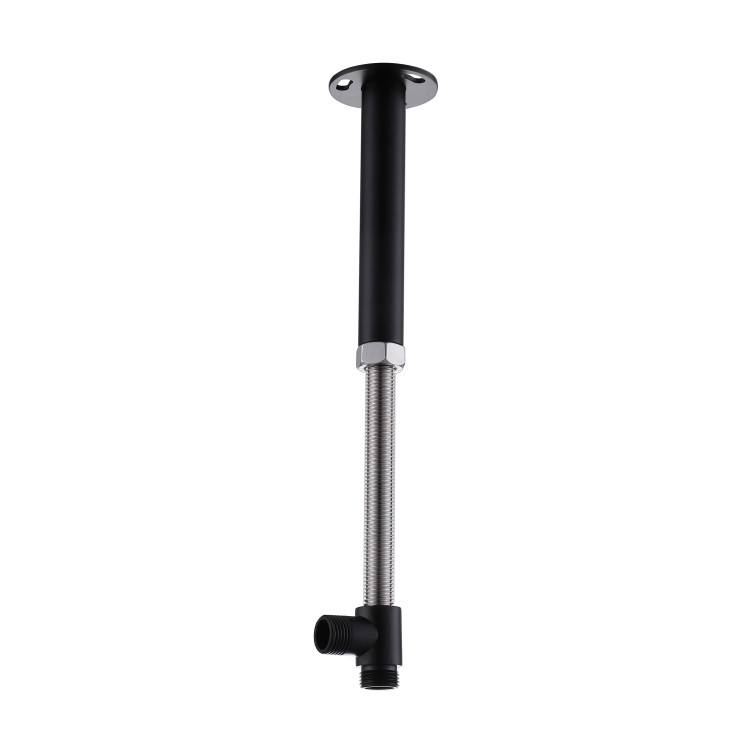
- Product Information
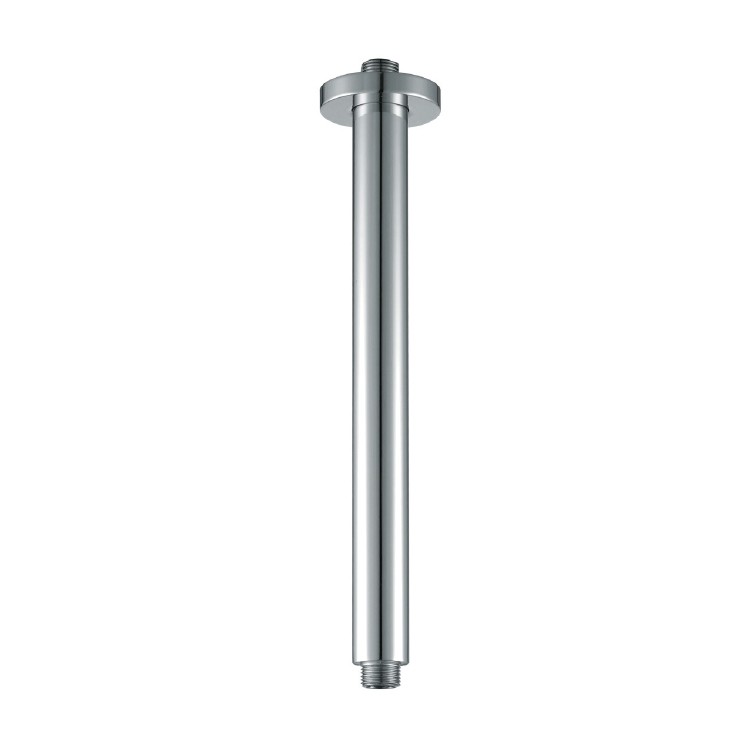
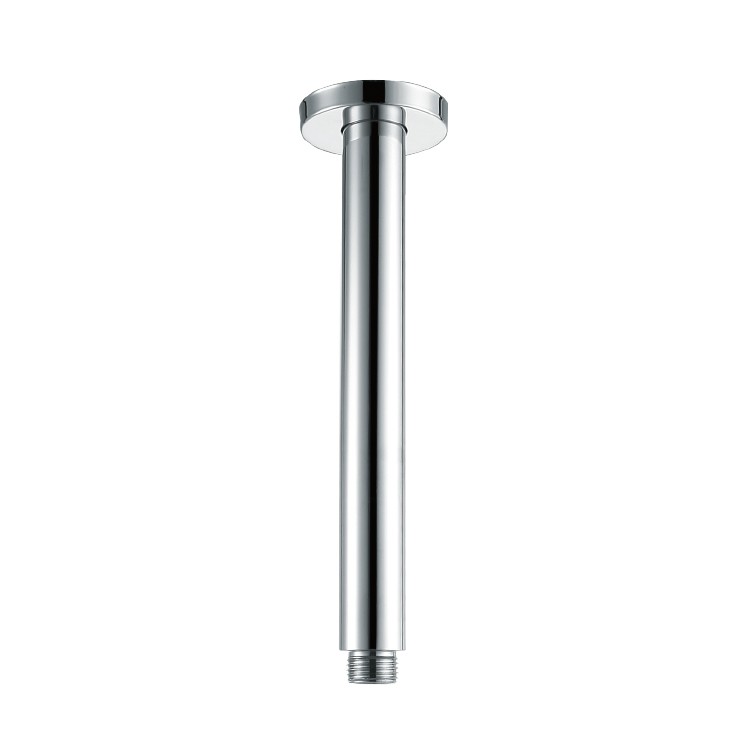
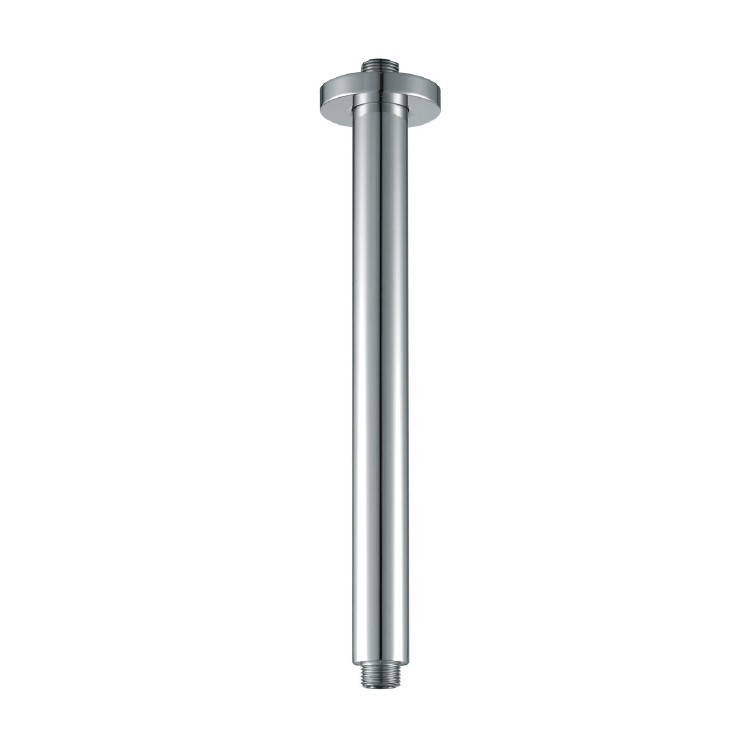
A Chrome Ceiling Shower Arm is a vertical connector installed between a ceiling-mounted water outlet and a fixed shower head, designed to suspend the shower head directly above the user. From the image, it presents a straight cylindrical form with a polished chrome surface and a round ceiling flange that conceals the installation point. In actual use, it creates a clean, symmetrical overhead layout, allowing water to fall naturally from above and enhancing the sense of space and openness in the shower area. The smooth chrome finish reflects light evenly, giving the bathroom a brighter, more refined visual impression while maintaining a solid, reassuring feel during installation and daily operation.
Chrome Ceiling Shower Arm Features
Solid Brass Body with Measured Mass Stability
The ceiling shower arm is produced from solid brass, providing sufficient mass and rigidity to support overhead rain shower heads. For ceiling-mounted arms of this length category, solid brass construction typically withstands static loads above 5 kg and continuous working pressures up to 1.6 MPa without bending or fatigue.High-Gloss Chrome Plated Surface
The chrome finish is applied through multi-layer electroplating, commonly including copper, nickel, and chrome layers with a combined thickness of approximately 20–25 μm. This structure improves corrosion resistance and allows the surface to pass neutral salt spray tests of 72–96 hours, suitable for long-term exposure to humid bathroom environments.Precision Cylindrical Geometry
The round tube profile is machined with consistent wall thickness, helping maintain straightness over the full vertical length. This uniform geometry minimizes deflection and ensures that the shower head remains vertically aligned, even when paired with large rain heads exceeding 300 mm in diameter.Standard G1/2-Inch Thread Interface
Both the ceiling inlet and shower head outlet use standard G1/2-inch threads with controlled pitch and depth. This accuracy supports secure sealing performance at flow rates commonly ranging from 8 to 12 L/min, reducing leakage risk during long-term use.